A thoughtful equipment list reduces avoidable problems, but no board, leash or wetsuit can turn an unsuitable session into a sensible one. Start with your ability and the advice of a qualified local instructor. Then choose equipment that supports the session they recommend. If the conditions exceed your experience, the correct equipment decision may be to leave everything dry.
Choose a board you can control
For many learners, an appropriately sized soft-top supplied by a reputable school is more practical than a performance board chosen for appearance. Volume, length, stability and handling all matter, and a bigger board still requires control around other people. Ask your instructor to explain the choice and show you how to carry it in wind, enter the practice area and keep clear of others.
When renting, inspect the board with the provider before taking it away. Check for damage, insecure fins and other problems, and record existing marks according to the rental agreement. Confirm what happens if equipment fails and what damage charges apply. Do not accept a board you cannot comfortably handle simply because it is the only one left.
Inspect the leash and fittings
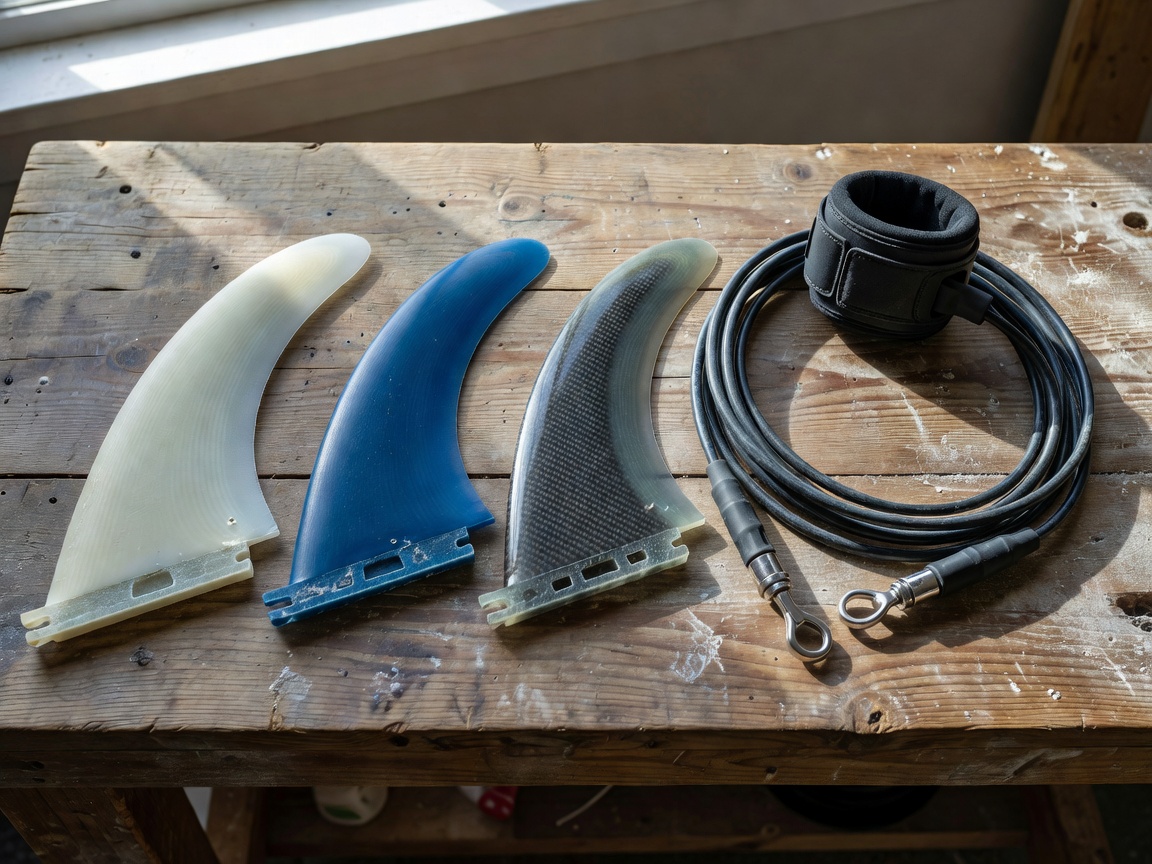
Use a surf leash appropriate to the board and conditions, selected with competent local advice. Check the cord, cuff, swivel, rail saver and attachment for wear or damage. Ask for a demonstration if you do not know how the equipment should be fitted. A leash can break or become entangled; it is not a flotation device and should never replace swimming ability or a conservative choice of location.
Fins should be securely fitted and free from obvious damage. Learn how to handle the board so the fins do not injure you or someone nearby. Avoid improvised repairs to critical fittings before a session. If you are unsure about any component, have the rental provider or instructor check it rather than relying on a quick visual guess.
Match thermal protection to the whole session
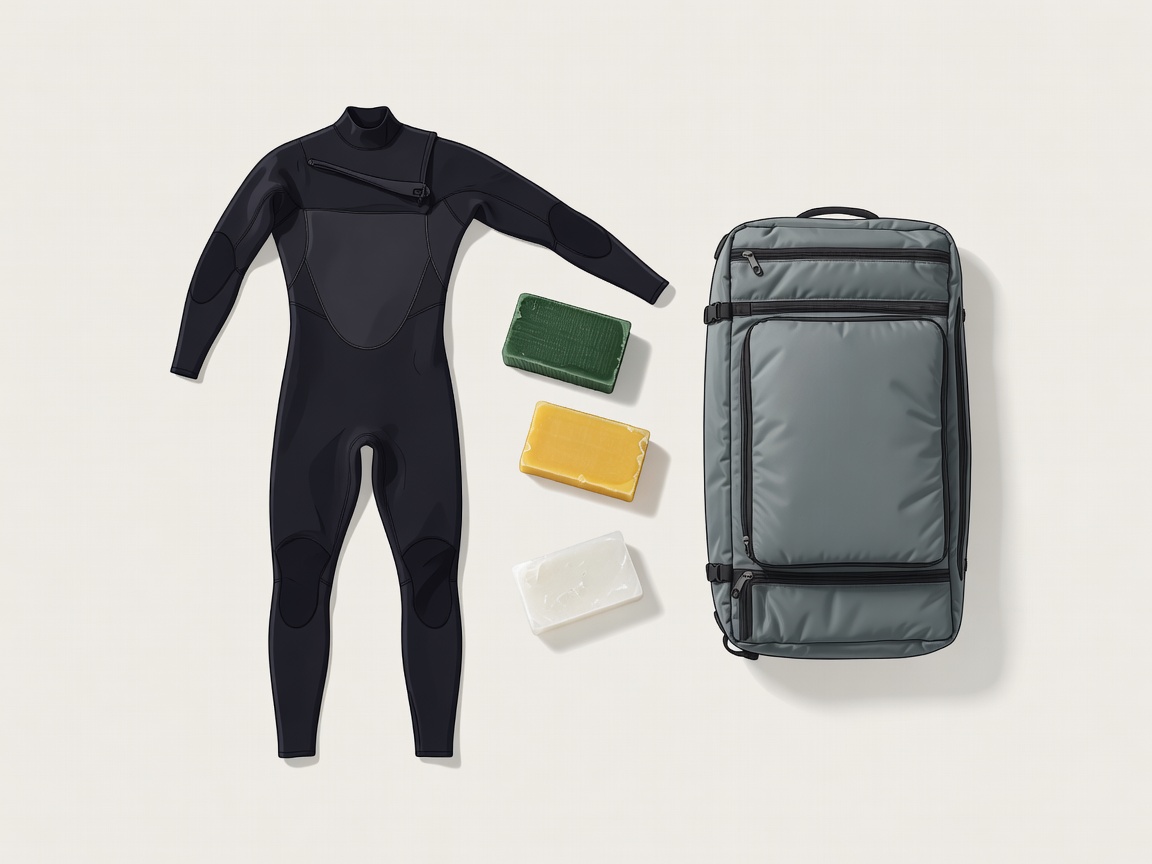
Water temperature is only part of comfort. Wind, air temperature, session length and your individual response to cold also matter. Ask a local provider about wetsuit suitability and fit rather than copying a thickness from an old travel article. A poorly fitted suit can be uncomfortable and less effective, while too much insulation can create other problems in warm conditions.
Bring appropriate sun protection, drinking water and dry layers for afterwards. Follow product instructions and local environmental rules. Boots may be appropriate in some circumstances, but they do not remove the consequences of reef, rocks or a difficult exit. Protective equipment is not permission to choose a more hazardous break.
Make the shore check part of the session
Read posted warnings and identify the permitted surfing area. Observe sets from a safe place, not just the quiet interval between them. Discuss entry, exit, currents, tide changes and what to do if separated from your equipment with a qualified local instructor. Check whether lifeguards are operating, but do not assume their presence makes every part of the beach suitable for you.
If you cannot explain where you will exit, how the water is moving and why the session fits your ability, pause. Ask for help before entering. Learn local emergency arrangements and keep relevant numbers accessible on land. Let a responsible person know your plan. If someone is in difficulty, alert lifeguards or the appropriate emergency service; do not attempt an untrained rescue that could create another casualty.
A sound exit plan belongs in your kit as much as a sound leash.
Respect the lineup through predictable behaviour
Learn priority and positioning with local instruction before joining a busy lineup. Do not drop in, paddle directly through someone’s path when a safer alternative is available, or release your board carelessly. Keep clear of active riding areas when learning. Local conventions can differ, so observe, ask respectfully and avoid assuming that a rule you heard elsewhere settles every situation.
Respect residents on land as well. Use authorised parking and access, take litter away, keep noise down and avoid sharing sensitive locations as social-media trophies. You are visiting someone’s everyday coast. Patient conduct matters more than getting an extra wave, and stepping away from a tense or crowded session is a reasonable choice.
Prepare for travel, not only surfing
Check airline board-bag rules directly, including size restrictions, fees and liability terms, before deciding whether to bring a board. Carry essential medication according to relevant travel rules and confirm your insurance covers the kind of surfing you plan to do. Store emergency contacts separately from your phone where practical. Rinse equipment when suitable facilities and local water-use rules allow, dry it responsibly and avoid blocking shared spaces.
Stop early: Fatigue, cold, confusion, damaged equipment or a deteriorating sea are reasons to end a session. You do not need to justify a conservative decision by waiting for an incident.